CPD Engineering
Smart Grid & Substation Automation
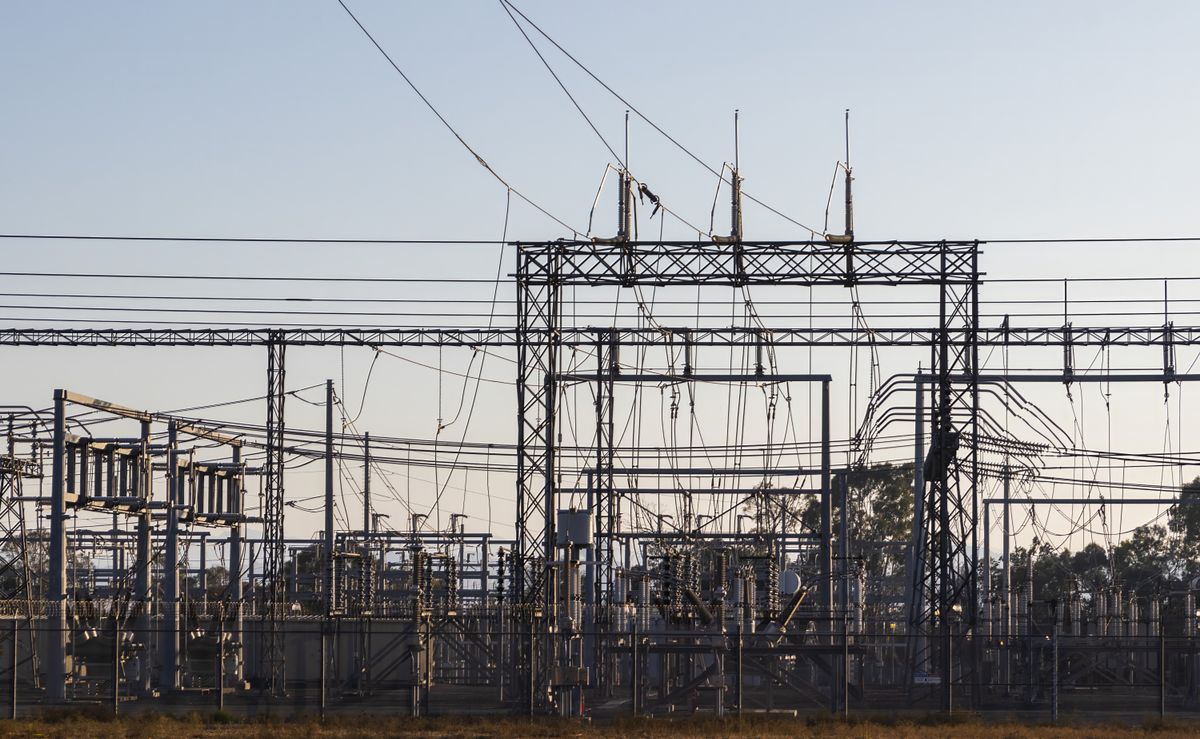
Protection, automation and renewable integration with HFL Chartered Practitioner badging.
From USD 480 6 levels · 42 h
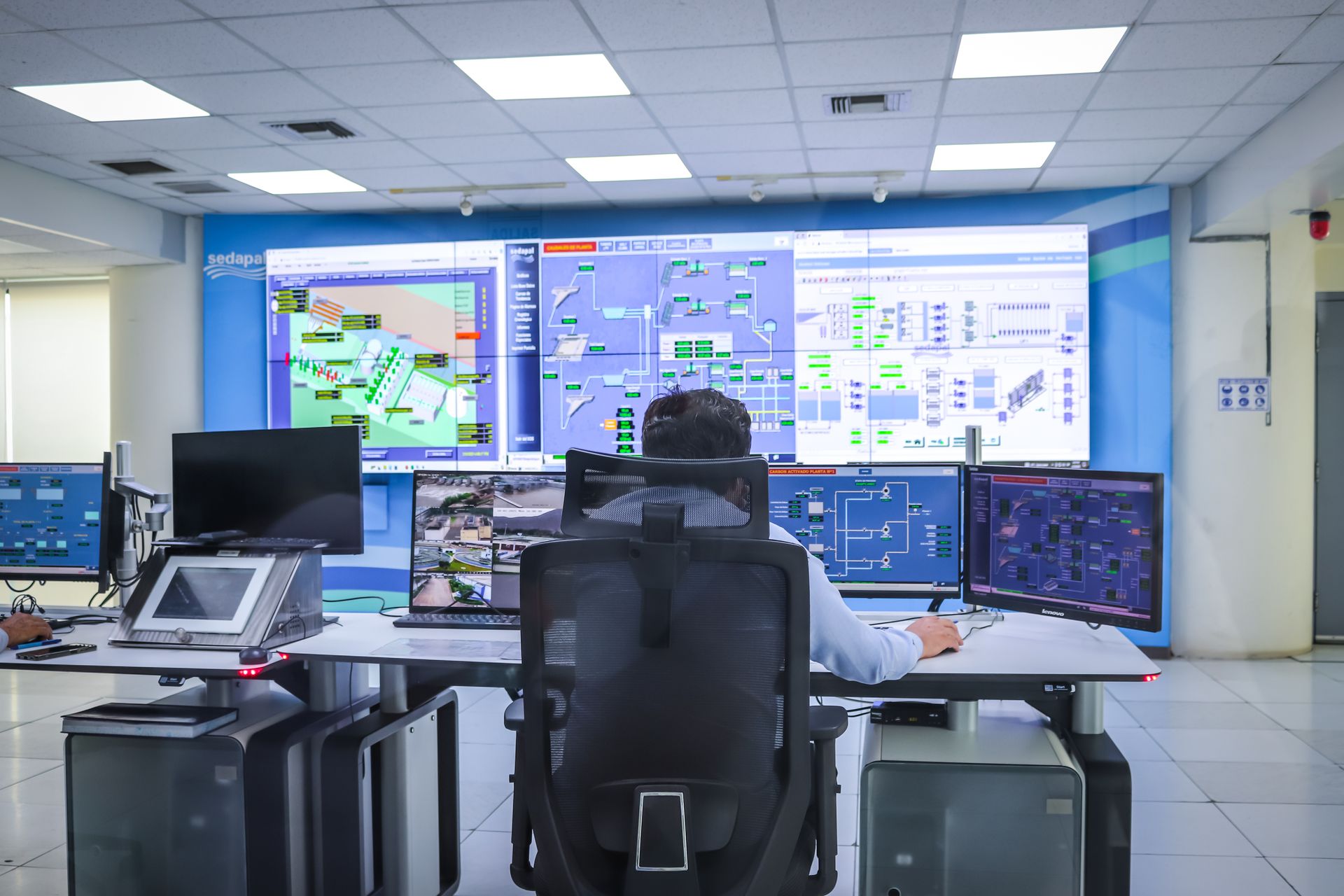
An integrated multi-tenant ecosystem uniting strategic sales, governance, continuous improvement and lifelong learning-to-earning pathways — bringing governments, institutions, corporates, MSMEs, Value Providers, Channel Partners, instructors and individual learners onto a single interoperable platform.

Platform status
24/7
SOC & SIEM coverage
HUMI
Verified member identity
Standards, frameworks and content interoperability we build to
HFLpass is not a collection of tools — it is a single Digital Enterprise Management layer where commercial, governance, learning, engineering and security operations share one identity model, one data fabric and one audit trail.
Digital Enterprise Management delivered as a Platform — hybrid integration, multi-tenant workspaces and a four-layer digital engineering flow.
Explore architectureOutcome-Driven Selling with 360° market insights, pipeline stage gates and a global rollout schedule across 100+ countries.
Open CRM moduleMonthly Process Level Controls, Control Performance Confirmation Programme sign-offs and validated CI cost savings.
See governance modelThe ATLE / LAB / LEAP / COLLATE / PAVER / LMS / EMS / PMP / PWP suite — certified learning and monetisation powered by HFL LEAP, HFL∞ Mobile, VARK LS and Bloom's Taxonomy.
Open ATLE / LMS / EMSDesign patterns, N-tier and event-driven architectures, Agile user stories, acceptance criteria and DevSecOps SOPs.
Read engineering standards24/7 monitoring, threat hunting, OT/ICS protection and Zero Trust architecture across enterprise and operational systems.
Review security fabricBrand Identity & Multi-Currency E-Commerce — the seventh pillar. Official HFL brand standards, marketplace catalogues and multi-currency checkout in USD, AED, INR, CAD, EUR and GBP.
Visit the marketplace
DEM & DAAP turns capital projects and institutional programmes into governed, instrumented digital assets. Every layer produces evidence that the layer above can audit.
Digital Enterprise Management (DEM) is not another application — it is the shared fabric beneath every HFL vertical. Instead of wiring each system to the next point-to-point, the fabric publishes a small set of reusable services that all pillars consume, so a sales opportunity, a governance control, a course completion and a security incident all resolve to the same member, the same project and the same record of truth. Digital as a Platform (DAAP) is how that fabric is delivered: multi-tenant, API-first and independently deployable per sector or jurisdiction.
One HUMI identity per member, federated to Entra ID or Google Workspace with role-based access to isolated tenant spaces.
One master data model, process orchestration and stage-gate engine unifying CRM, GRC, LMS/EMS and OT/IT telemetry.
Every action is date-stamped, owner-stamped and evidence-linked, producing one board-readable audit trail across jurisdictions.
Project digital charter, EIR/BEP standards, ISO 19650 compliance and asset data dictionaries.
3D/4D/5D building information models, geospatial alignment and EPC digital commissioning.
Real-time edge telemetry, OT–IT bridge, industrial message bus and sensor aggregation.
Living physical twin simulation, failure prediction, heat-rate optimisation and autonomous dispatch.

Every service shipped into the DEM fabric is documented, testable, secure and reversible. The same engineering playbook applies whether we are building a learner portal, a governance register or an OT integration.
Repository and unit-of-work data access, N-tier and clean architecture, CQRS and event-driven messaging, facade and dependency-injection boundaries. API-first contracts keep the front end decoupled from the operations engine, so any layer can be replaced without a rewrite.
Epics are decomposed per persona into user stories with testable acceptance criteria, a Definition of Ready and a Definition of Done. Sprint ceremonies, backlog grooming and release traceability connect every shipped feature back to the person who needed it.
Coding standards, branching and code-review policy, testing strategy, CI/CD release gates, infrastructure as code, threat modelling and incident runbooks. DevSecOps controls are embedded in the pipeline — static analysis, dependency scanning and secrets management run before deployment, not after.
One spine connects authoring, training, learning, assessment, credentialing and payout — the ATLE pathway. Instructors, academies, enterprises and course creators all publish into the same catalogue, and every completed outcome is verifiable and monetisable.
VARK LS profiling, Bloom's Taxonomy mapping and the 6-level skills framework turn a subject into a sequenced, assessable programme.
iOS, Android and Windows with offline SCORM launch, GPS presence sensing and mobile analytics for learners beyond reliable connectivity.
Every module is tagged to Visual, Auditory, Reading/Writing or Kinesthetic preferences and to a cognitive level, so cohorts get the medium that works and analytics show where competence really sits.
SCORM 1.2/2004, AICC, Tin Can (xAPI) and PDF/PPT/Word knowledge content with HFL TV; creator royalties, cohort monetisation and multi-currency payouts.
Pedagogy · post-COVID OECD mandates
Programme design follows current OECD guidance on effective and equitable learning after COVID-19: competency-based, learner-centred pathways that blend in-person and digital delivery; explicit support for wellbeing and inclusion; and digital, data and media literacy woven through every stream. Assessment is used for learning rather than for ranking, and content is sequenced as short, stackable modules with continuous formative feedback, so progress is measured against demonstrable competence — not seat time — and learners can resume, transfer and accredit learning across institutions and borders.




Governance runs on a single execution rule enforced by the platform: a control is only ticked when the activity is complete and the stated evidence exists — with an actual completion date and a named owner.
Process Level Controls are reviewed monthly and the Control Performance Confirmation Programme is signed off in GRCM, producing a continuous, board-readable audit trail across every jurisdiction.
Monthly
PLC review cycle
100%
Evidence-ticked controls
Savings initiatives captured, tracked and validated in HFL Analyzer before they are recognised.
Risk-driven avoidance is measured against a documented baseline, never against an estimate.
Process Level Controls are reviewed every month, and a control is only marked complete when the activity is finished and the stated evidence exists — with an actual completion date and a named owner. The Control Performance Confirmation Programme sign-off is recorded in GRCM, giving every jurisdiction one continuous, board-readable audit trail instead of an annual reconciliation.
Continuous improvement is split into cost reduction (CI-CR) and cost avoidance (CI-CA). Each initiative is captured with a documented baseline, tracked through execution and validated in HFL Analyzer before any saving is recognised — so a claimed saving is a measured result, not an estimate. Savings flow back into the same evidence ledger as the controls that produced them.

One security fabric spans IT and OT: endpoints, cloud applications, ERP/CRM, SCADA and industrial controllers all report into a central SIEM that is watched continuously by L1–L3 analysts.
Layer 01
Endpoints, cloud apps, firewalls, servers, ERP/CRM, SCADA, OT PLCs and IIoT controllers.
Layer 02
Central SIEM correlation, behavioural anomaly analytics and automated alert routing.
Layer 03
24/7 monitoring, proactive threat hunting, incident triage, containment and forensic response.
Layer 04
NERC-CIP, IEC 62443 and ISO 27001 regulatory audits, board risk dashboards and resilience metrics.
24/7 monitoring
A follow-the-sun L1–L3 analyst rota watches the SIEM continuously, so there is no unattended window between regions. Correlation rules, behavioural analytics and automatic prioritisation turn millions of raw events into a ranked queue; triage, containment, forensic capture and the regulator-ready evidence pack all happen inside the same platform. Detection content is tuned from real incidents and red-team findings rather than left static.
Zero Trust
No user, device or workload is trusted because of their network location. Identity and device posture are verified on every request, access is least-privilege and just-in-time, sessions are micro-segmented, and OT/ICS traffic is inspected at the boundary. The model is mapped to IEC 62443, NERC-CIP and ISO 27001 controls, with continuous verification feeding the assurance layer above.

HFLpass Azure CRM carries 360° market insights, pipeline stage gates and global rollout schedules across 100+ countries, with customer experience measured continuously rather than reported annually.
G1–G10
Stage-gate control register
30 days
Account-manager priorities
NPS
Country-scheduled surveys
360°
Market insight coverage
A single view of demand assembled from CRM history, partner and channel signals, market and competitor intelligence, and platform telemetry. Territory, sector, account and country views expose where the pipeline is real, where it is stalling and which segments are worth resourcing next — instead of relying on annual surveys.
Every opportunity advances through the G1–G10 stage-gate control register, and a gate only opens when its evidence is attached and its exit criteria are met. Forecasts are therefore built from verified progress and named owners, giving boards a decision about capacity rather than a debate about the pipeline.
AHFL UAE carries global investment and governance; AHFL India carries delivery, engineering and the talent pipeline. Two jurisdictions, one enterprise ecosystem.

UAE Regional Hub
Sovereign capital interface, free-zone corridors and cross-border trade finance integration.

India HQ
Manufacturing platforms, HUMI-ID academies and MSME partner ecosystem integration.

Canada HQ
Research partnerships, clean-energy IP and the Oakville corporate seat.
USD 7.98B
15-year revenue target (base case, 2040)
USD 1.95B
15-year EBITDA at a 24.4% margin
USD 10B+
Potential enterprise value at 12× EBITDA
70%
Target recurring revenue by 2040
Members-only intelligence
The 15-year revenue, EBITDA, enterprise-value and recurring-revenue model is part of the paid resource centre. Become a member to unlock the full model.
Unlock with membership19 core operational sectors and 24 blended learning and earning streams, priced in the currency your institution reports in.
Protection, automation and renewable integration with HFL Chartered Practitioner badging.

Automated 90/60/30-day recertification alerts and annual credit audits for practitioners.

CI/CD pipelines, UML modelling, testing strategy and security SOPs for engineering teams.
“The stage-gate model changed how we forecast. Every opportunity carries its own evidence, so board reviews stopped being a debate about the pipeline and became a decision about capacity.”

Group Commercial Director
Industrial infrastructure group
“We moved 4,000 practitioners onto one catalogue without rebuilding a single course. SCORM, AICC and Tin Can packages all launched, and recertification alerts ran themselves.”

Head of Learning & Development
Professional certification body
“Having OT and IT telemetry in one SIEM gave our analysts a single narrative. Containment time dropped and the audit pack for regulators is generated, not assembled.”

Chief Information Security Officer
Energy & utilities operator
Three operating bases, one support model. Enquiries are triaged and routed to the team that owns the answer — whether it is a tenant rollout, a catalogue migration, a governance audit or a security disclosure.

India HQ · Bengaluru
No. 403, Wing 4, 8th Cross, 1st Main, BHCS Layout, Uttarahalli, Bengaluru, Karnataka – 560061, India
Mon–Fri · IST
Delivery, engineering, learning operations and MSME onboarding.

Canada HQ · Oakville
Cornwall Road, Oakville, Ontario, Canada, L6J 7W5
Mon–Fri · EST
Group governance, brand and IP, institutional partnerships and clean-tech programmes.

UAE Hub · Dubai
Shorooq Mirdif, Dubai, United Arab Emirates, C36
Sun–Thu · GST
Investment and sovereign interface, free-zone deployment and trade finance.
Platform support handles tenant access, content migration and catalogue administration. The executive office handles institutional partnerships, sovereign programmes and joint ventures. Every request is logged and routed to the team that owns it.
Still need specifics? Our platform team runs architecture reviews for institutional buyers.
Talk to the platform teamBuild > Integrate > Operate > Monetise
Architecture reviews, tenant mapping, content migration and a staged rollout plan — scoped against your sector, jurisdictions and compliance obligations.
Sign in or sign up, then open the portal for your participant type.
